A customer lands on a skincare site looking for something for dry skin. There are forty products on the shelf page, no filters that actually help, and nothing on the site asking what her skin type is or what she’s trying to fix. She leaves, unsure which of the forty bottles is actually right for her. This is exactly the gap a WooCommerce recommendation plugin is built to close, whether that means suggesting what pairs well with an item already in view, or actively helping an undecided shopper find the right product in the first place.
WooCommerce comes with very little built in for this. There’s a basic, category-based “Related Products” section and a manual “Upsells” and “Cross-sells” field, neither of which does any real work to guide a shopper toward the right choice. If you want recommendations that reflect what customers actually buy together, that adapt based on behavior, or that actively ask a shopper a few questions to point them toward the right product, you need a dedicated plugin.
There are now several WooCommerce recommendation plugins on the market, and “recommendation” means different things depending on the plugin. Some generate suggestions automatically from order history. Others let you set precise rules and targeting by hand. A newer category asks the shopper directly, through a short quiz, then recommends a product based on the answers. Picking a plugin just because it promises “smart” or “AI-powered” recommendations often leads to a mismatch between what your store actually needs and what the plugin does. The better question is: are you trying to suggest an add-on to something a shopper already picked, or help someone who doesn’t yet know what they want?
This guide looks at each plugin one by one. It explains what each one does, how it generates a recommendation, what they cost, and where they fall short. By the end, you should be able to match a plugin to your store, not just install the most familiar name.
How I Evaluated These Plugins
Before the list, it helps to explain how these plugins were judged. A long feature list does not tell the whole story. A plugin can promise smart, personalized suggestions and still generate something generic, because the underlying logic doesn’t fit your specific catalog or your shoppers’ actual decision-making process.
Each plugin was reviewed from the point of view of a WooCommerce store owner. How easy is it to get your first recommendation live? Does the plugin solve the right problem, suggesting an add-on, or genuinely helping someone choose? Are the recommendations shown somewhere a customer will actually notice and act on? Does it feel stable enough to trust on a live store, where a bad or irrelevant suggestion can cost more than it earns?
Before you install any recommendation plugin, back up your store first. These plugins connect directly to your product pages and, in some cases, your cart and checkout. A recent backup matters more here than with most other plugin types.
Here are the main things this comparison looked at:
- Type of recommendation — Is it an add-on suggestion for an item already chosen, or a tool that helps a shopper choose in the first place?
- How the recommendation is generated — Automatically from order history, manually by hand, by rule-based targeting, or through a quiz?
- Targeting and rules — Can recommendations be shown only to certain visitors, based on product, category, cart total, or customer type?
- Broader offer coverage — Does the plugin only handle one moment in the journey, or does it also cover the cart, checkout, and post-purchase?
- Pricing and free plan — Is the free version actually useful? Or is it just a demo meant to push you toward paying?
The Best WooCommerce Recommendation Plugins
| Plugin | Pricing | Best For |
|---|---|---|
| PickPair | Freemium (paid plans on request) | Recommendations across the whole customer journey, from one plugin |
| WooCommerce Product Recommendations | Premium (official WooCommerce.com extension) | Stores that want an official WooCommerce.com extension |
| Personalized Recommendations (StoreApps) | Premium (from $149/yr) | Advanced, rule-based recommendation logic |
| Product Finder | Freemium (Pro pricing on request) | A quiz-style engine to help undecided shoppers choose |
| Boost Sales | Freemium (Pro pricing on request) | Automatic, order-history-based suggestions |
| FunnelKit | Freemium (from $99.50/yr) | Recommendations plus email automation |
| UpsellWP | Freemium (Pro from $69/yr) | Best free recommendation plugin to start with |
1. PickPair — Best All-in-One WooCommerce Recommendation Plugin
PickPair works well for store owners who want relevant, targeted recommendations on the product page, in the cart, at checkout, and after purchase, all from one plugin. If you want a single dashboard instead of several tools to cover the whole buying journey, start here.
On the product page, PickPair shows an Amazon-style “Frequently Bought Together” box, where you choose exactly which products should be recommended together, instead of relying on category-based guesswork. In the cart, it recommends related products and shows a free shipping progress bar. At checkout, recommended add-ons appear as order bumps with a single checkbox. After the sale, a Thank You page offer recommends one more relevant product, and an automatic next-order coupon brings the customer back to shop again later.

The recommendations are not shown to everyone the same way. Smart Rules let you target by product, category, cart total, customer type, login status, or past orders, so a first-time visitor and a returning customer don’t see the exact same suggestion. PickPair works with both the classic WooCommerce checkout and the newer Cart and Checkout Blocks, and every recommendation has its own report showing views, clicks, and revenue.
Key features:
- Frequently Bought Together bundles on the product page, with manual or rule-based product selection.
- Cart recommendations and a free shipping progress bar.
- Checkout order bumps added with a single checkbox.
- Add-to-cart pop-up recommendation.
- Post-purchase Thank You page offers.
- Automatic next-order coupon to bring customers back.
- Smart Rules based on product, category, cart total, customer type, login status, and order history.
- Works with both the classic checkout and the Cart and Checkout Blocks.
- Built-in reporting for each recommendation, so you don’t need a separate analytics tool.
Pros:
- Covers five different recommendation locations from one plugin.
- Free plan is genuinely useful, not just a locked demo.
- Smart Rules stop the same recommendation being shown to every visitor.
- Built-in reports mean you don’t need another tool for analytics.
- Works well with WooCommerce’s newer block-based checkout.
Cons:
- Newer to the market, so it does not yet have years of reviews like some older plugins.
- Fewer third-party guides and community discussions than more established tools.
- No quiz-style “help me choose” feature for undecided shoppers, unlike Product Finder.
- Paid plan pricing is not listed publicly; you need to check with the plugin’s own website for a quote.
Pricing: A free plan is available. Paid plans exist for stores that need higher limits or more advanced targeting. Check the official PickPair website for current pricing.
Final verdict: PickPair is a strong pick if you don’t want to manage several plugins just to show relevant recommendations across your store. Covering the product page, cart, checkout, and post-purchase stage from one dashboard, with shared rules and one set of reports, is its main advantage over using several smaller plugins together.
2. WooCommerce Product Recommendations — Official Recommendation Extension
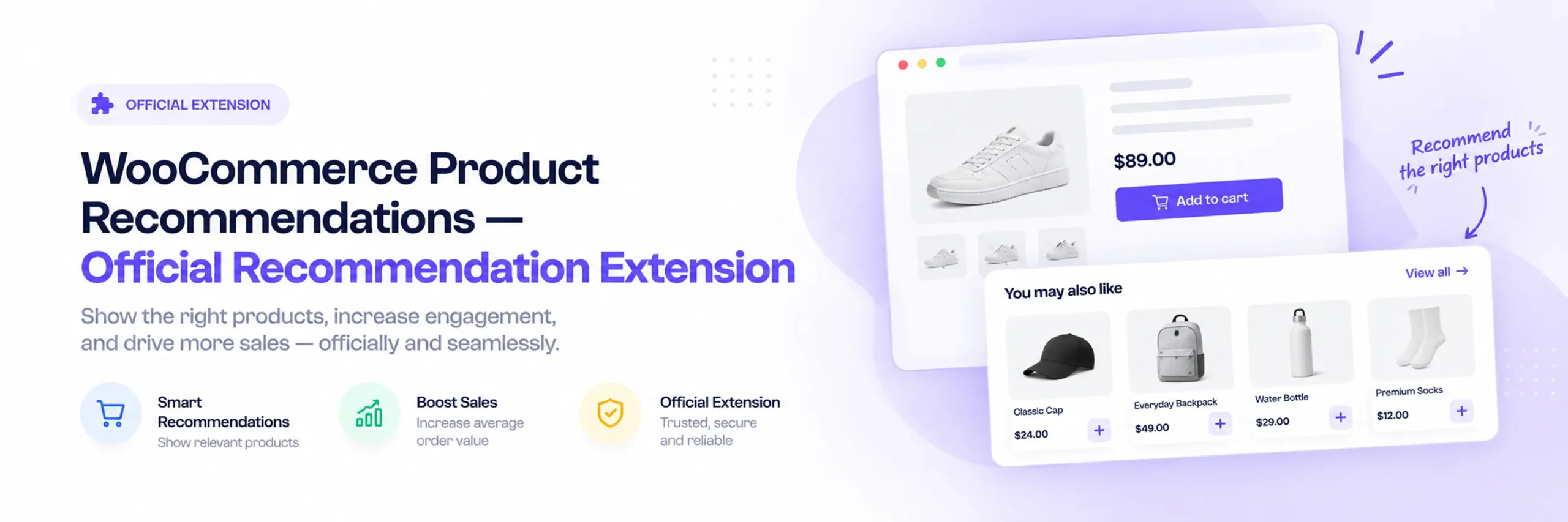
WooCommerce Product Recommendations works well for stores that specifically want an extension built and maintained by WooCommerce.com itself. If sticking to official, first-party tools is a priority for your store, this is the safest name on this list.
This extension shows “customers also bought,” “you may also like,” and “frequently bought together” style recommendations across the product page, cart, and checkout, using WooCommerce’s own order data to decide what to suggest automatically. Because it is built directly by the WooCommerce.com team, it tends to stay closely in step with core WooCommerce updates, and it also supports manual recommendation blocks that you set by hand.
Key features:
- Automated “customers also bought” and “frequently bought together” recommendations.
- Manual recommendation blocks you can set by hand.
- Placement on the product page, cart, and checkout.
- Built on native WooCommerce order data.
Pros:
- Built and maintained by the official WooCommerce.com team.
- Tends to stay well aligned with core WooCommerce updates.
- Automated recommendations need little manual setup.
Cons:
- No free version.
- Less flexible targeting than dedicated rule-based recommendation plugins.
- No quiz-style discovery feature for undecided shoppers.
Pricing: No free version. Sold as a yearly subscription through the official WooCommerce Extensions store; check WooCommerce.com for current pricing.
Final verdict: Worth it if you specifically want an official, first-party extension and don’t need advanced targeting or a shopper-facing discovery quiz. For deeper rules or a fuller recommendation journey, a dedicated plugin goes further.
3. Personalized Recommendations by StoreApps — Advanced Rule-Based Recommendations
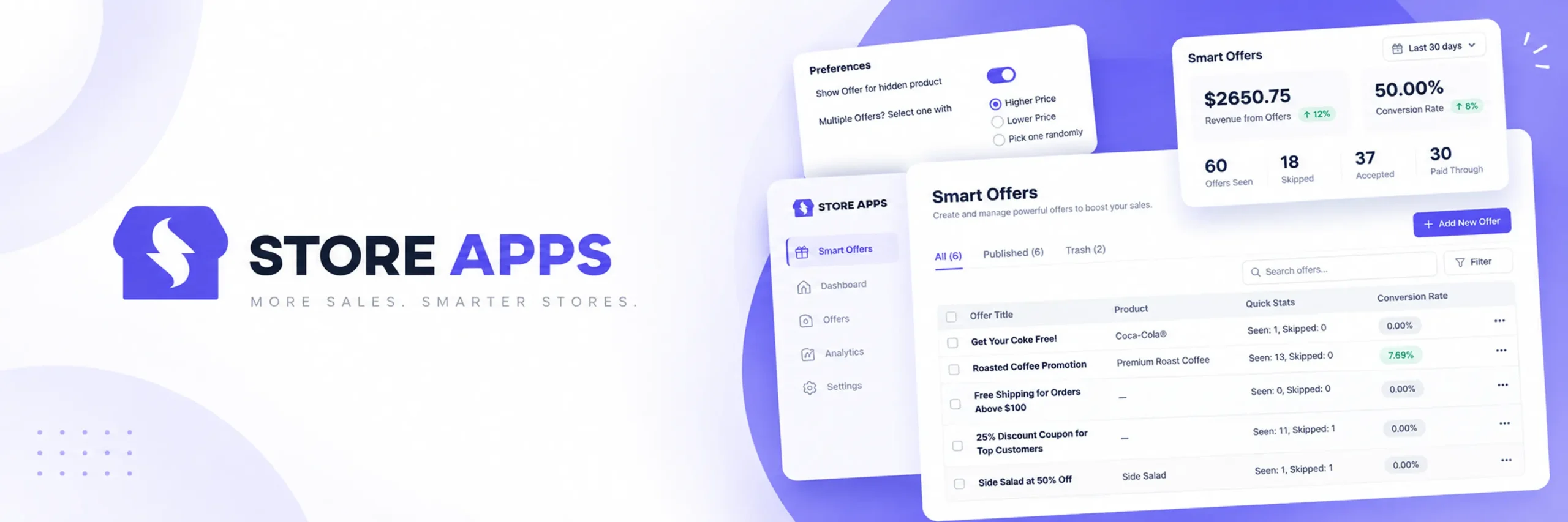
Personalized Recommendations works well for stores that want recommendation logic too complex for a simple “related products” box. If your store needs conditional rules and suggestions that change based on customer behavior, this plugin is built for that.
Built by StoreApps, this plugin supports cart recommendations, checkout suggestions, one-click post-purchase upsells, BOGO (buy one get one) deals, and product bundles. All of these can be controlled with AND/OR rules based on product, variation, quantity, category, cart total, attribute, or user role. Its standout feature is sequencing: a recommendation can lead to a different follow-up offer, depending on whether the customer accepts or declines the first one.
Key features:
- Cart and checkout recommendation offers.
- One-click post-purchase upsells.
- BOGO offers and product bundles.
- AND/OR targeting rules based on product, category, cart total, attribute, and user role.
- Sequenced offers that change based on accept or decline behavior.
Pros:
- The deepest targeting and rules engine of any plugin in this guide.
- Offer sequencing is not offered by any other plugin here.
- Handles complex, conditional recommendation logic well.
Cons:
- No free version, so you cannot test the rules engine before paying.
- Setup takes longer than plugins built around simpler, single offers.
- No shopper-facing discovery tool for undecided visitors.
Pricing: No free version. Starts at around $149 per year for one site.
Final verdict: Personalized Recommendations is worth the price when your recommendation logic is genuinely complex. If you just want “show related products on every order,” a simpler, cheaper plugin will get you there faster.
4. Product Finder — Best Quiz-Style Recommendation Engine
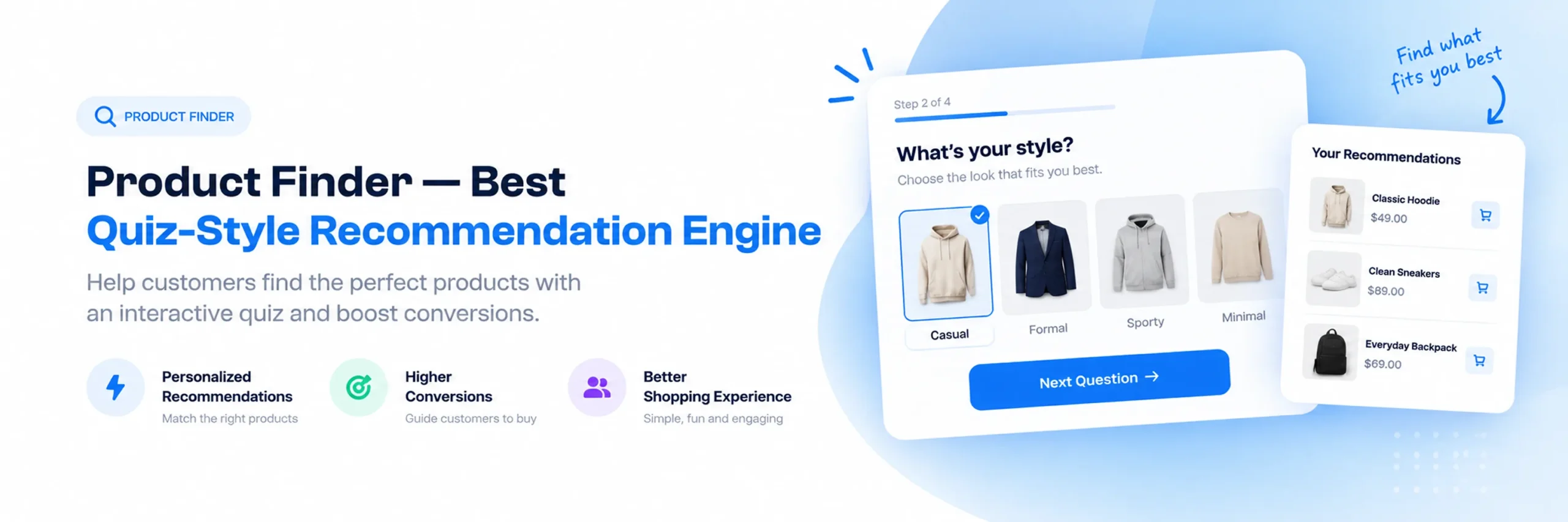
Product Finder works well for stores where the real problem isn’t suggesting an add-on, it’s helping a shopper choose between many similar products in the first place. If your catalog has dozens of similar items and customers regularly seem unsure which one fits them, this plugin solves a different problem than the others on this list.
Product Finder builds a short, guided quiz that asks the shopper a few questions, skin type, budget, intended use, room size, whatever’s relevant to your catalog, and then recommends one or a few specific products based on the answers. Instead of showing every option and hoping the shopper figures it out, it narrows the decision down for them. This is a genuinely different mechanism from an automatic “frequently bought together” suggestion, and it tends to work best for catalogs where the right product depends on the customer’s specific situation.
Key features:
- Guided, multi-question product-finder quiz.
- Logic-based product matching from quiz answers.
- Customizable quiz questions and branching logic.
- Results page showing the recommended product or products.
Pros:
- Solves a genuinely different problem than an add-on recommendation box.
- Works especially well for catalogs where the right product varies by customer situation.
- Can double as a lead-capture tool if you collect an email before showing results.
Cons:
- More setup time than a simple related products box, since you’re designing a full quiz.
- Not useful for every catalog, works best where products genuinely vary by customer need.
- Smaller user base and less documentation than the more established names on this list.
Pricing: A free version is available with basic quiz functionality. Pro pricing is available on request from the developer’s site.
Final verdict: Worth it specifically if your store sells a range of similar products where the right choice depends on the customer’s situation, skincare, supplements, or anything else with real variation between options. For a simple “goes well together” suggestion, other plugins on this list are a better fit.
5. Boost Sales — Best for Automatic, Order-History-Based Recommendations
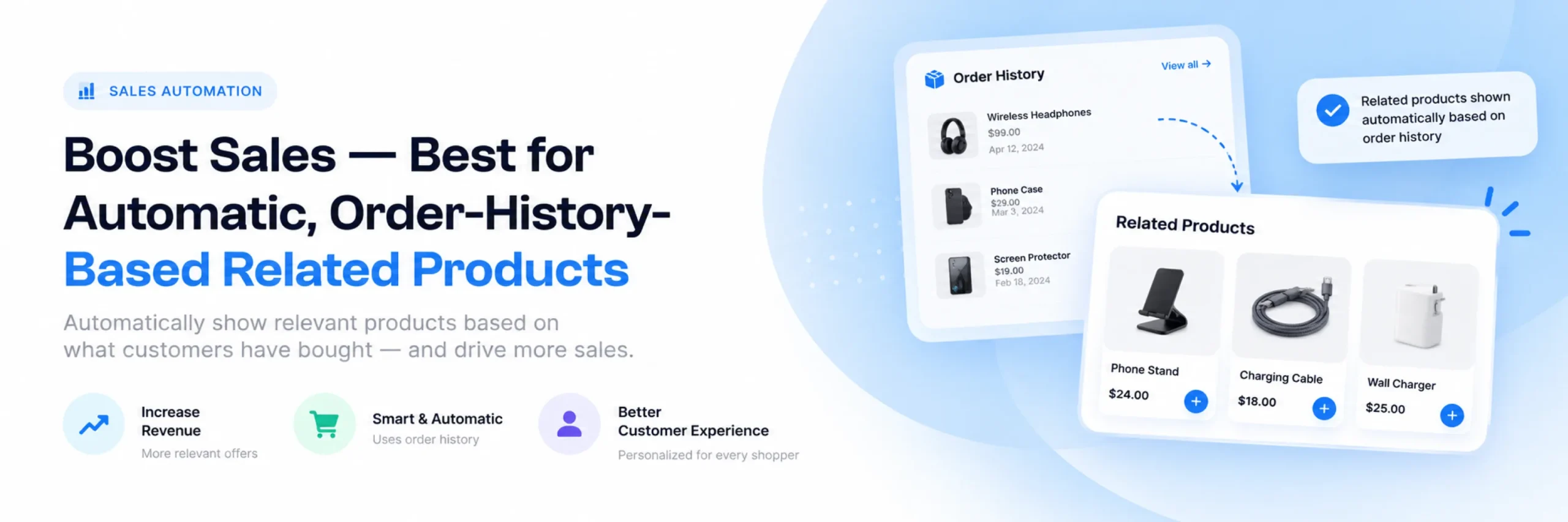
Boost Sales works well for stores with enough order history to let an algorithm find genuinely related products on its own, without manually mapping every item by hand. If you’d rather let the data do the work as your catalog grows, this plugin is built for that.
Boost Sales analyzes past orders to automatically surface products that are frequently bought together, updating its suggestions as new orders come in. This removes the manual maintenance burden of updating recommendations by hand every time you add a new item, though it depends on having enough order volume for the suggestions to be meaningful.
Key features:
- Automatic, order-history-based recommendations.
- Suggestions update as new orders come in.
- Display on the product page and cart.
- Manual override options for specific products.
Pros:
- Requires little ongoing manual maintenance once set up.
- Suggestions improve automatically as your store accumulates more sales data.
- Manual override available for products that need a specific fix.
Cons:
- Less accurate for a newer store or a small catalog with limited order history.
- Automatic suggestions can occasionally surface odd pairings without manual review.
- Smaller user base and less documentation than the more established names on this list.
Pricing: A free version is available with basic functionality. Pro pricing is available on request from the developer’s site.
Final verdict: Worth it specifically for a store with meaningful order history that wants recommendations to stay current without manual upkeep. For a newer store, manual selection tends to produce more reliably relevant suggestions.
6. FunnelKit — WooCommerce Recommendation Plugin with Email Automation
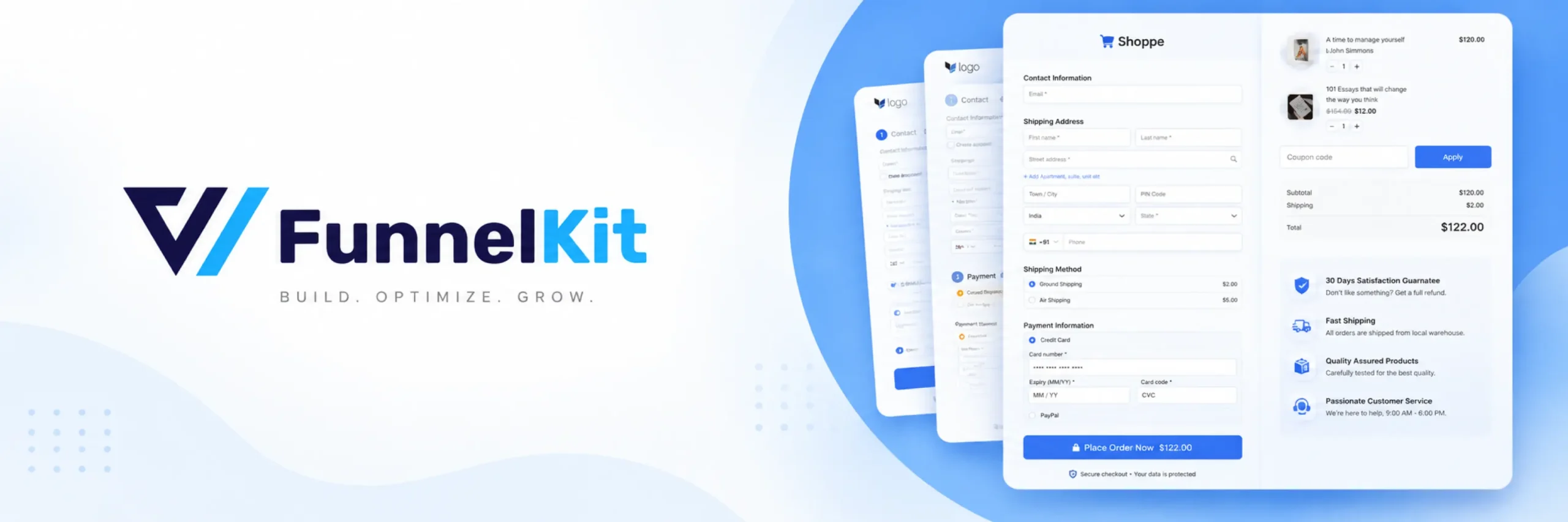
FunnelKit works well for stores that want checkout recommendations and order bumps along with built-in email marketing automation. If checkout improvements and post-purchase email sequences are both on your list, this plugin covers both.
FunnelKit, formerly WooFunnels, is really two tools joined together. One part handles checkout order bumps and one-click post-purchase upsells, letting you set rules based on cart contents or customer behavior. The other part is a CRM and email automation system called FunnelKit Automations, handling things like abandoned cart recovery and win-back emails, the kind of work you would otherwise need a separate email tool for.
Key features:
- Checkout order bumps with rules based on cart contents and customer behavior.
- Several recommendation offers on the same checkout page.
- One-click post-purchase upsells and downsells.
- A/B testing for offer wording and design, on higher-priced plans.
- Built-in CRM and email automation through FunnelKit Automations.
Pros:
- Combines recommendations with a real CRM and automation system.
- You can run several offers on the same checkout page.
- Well-known plugin with a large number of users.
Cons:
- Full features like A/B testing and deeper automation need higher-priced plans.
- No dedicated product-page recommendation feature or quiz tool.
- If you only want recommendations, you may pay for automation tools you never use.
Pricing: Paid plans start around $99.50 per year for one site. Higher plans, around $179.50 and $249.50 per year, unlock more sites and deeper automation features. A free version of the core Funnel Builder and Automations tools is also available for basic use.
Final verdict: FunnelKit is worth it if email marketing automation is genuinely part of your plan. If it is not, you may be paying for more plugin than you actually need just to get product recommendations.
7. UpsellWP — Best Free WooCommerce Recommendation Plugin
UpsellWP works well for store owners who want to test whether product recommendations work for them before paying for a plugin. If you want a free plan that actually works, not just a locked demo, this is the best free WooCommerce recommendation plugin on this list.
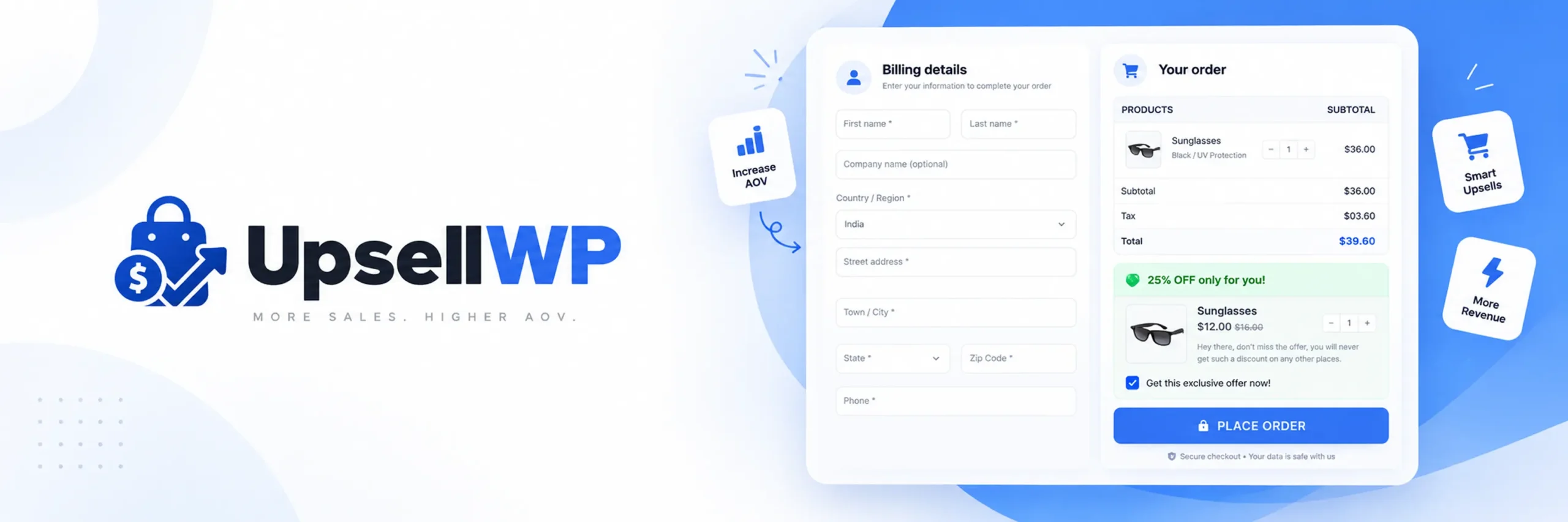
UpsellWP focuses only on upsell and cross-sell offers, rather than trying to be a full funnel builder. This keeps its interface simpler than CartFlows or FunnelKit. The free version, available on WordPress.org, includes real, usable features: checkout order bumps, cart recommendations, and Frequently Bought Together suggestions are all included before you pay anything.
Key features:
- Checkout order bumps (free plan).
- Cart recommendations (free plan).
- Frequently Bought Together suggestions (free plan).
- Post-purchase offers (Pro plan).
- A/B testing (Pro plan).
- Advanced conditional targeting (Pro plan).
Pros:
- The free plan covers checkout and cart recommendations with no trial period.
- Simpler interface than the larger funnel-builder plugins.
- A low-risk way to test whether recommendations work before you pay.
Cons:
- Post-purchase offers, A/B testing, and advanced targeting need the Pro plan.
- No shopper-facing discovery quiz for undecided visitors.
- Overall feature set is smaller than the bigger funnel platforms.
Pricing: Free version available on WordPress.org. Pro plans start from around $69 per year.
Final verdict: UpsellWP is a good place to start if you are not yet sure whether product recommendations are worth the investment for your store. The free plan gives you enough to find out, before you spend any money.
Detailed Feature Comparison Table
| Plugin | Recommendation Type | Product Page | Cart/Checkout | Post-Purchase | Free Version | Starting Price |
|---|---|---|---|---|---|---|
| PickPair | Manual + rule-based | ✅ | ✅ | ✅ | ✅ | Free plan available |
| WooCommerce Product Recommendations | Automatic + manual | ✅ | ✅ | ❌ | ❌ | Check WooCommerce.com |
| Personalized Recommendations | Rule-based, sequenced | ❌ | ✅ | ✅ | ❌ | $149/yr |
| Product Finder | Quiz-based | ✅ (results page) | ❌ | ❌ | ✅ | Check official site |
| Boost Sales | Automatic (order history) | ✅ | ✅ (cart) | ❌ | ✅ | Check official site |
| FunnelKit | Rule-based | ❌ | ✅ | ✅ | ✅ | $99.50/yr |
| UpsellWP | Manual | ✅ | ✅ | ✅ (Pro) | ✅ | $69/yr |
Best Plugins by Use Case
Here is a quick summary of which WooCommerce recommendation plugin is best for each type of need, based on the full reviews above.
Best overall WooCommerce recommendation plugin: PickPair. It covers product page, cart, checkout, and post-purchase recommendations from one plugin, with shared rules and reports.
Best official extension: WooCommerce Product Recommendations. Built and maintained directly by the WooCommerce.com team.
Best for advanced targeting: Personalized Recommendations by StoreApps. It is the only plugin here with true offer sequencing and AND/OR rule logic.
Best for helping undecided shoppers choose: Product Finder. A guided quiz that narrows down the right product for the customer’s specific situation.
Best for automatic, data-driven suggestions: Boost Sales. Recommendations update on their own as order history grows.
Best for email marketing and order bumps: FunnelKit. It combines checkout recommendations with a full CRM and automation system.
Best free WooCommerce recommendation plugin: UpsellWP. Its free plan is genuinely useful, covering checkout bumps, cart recommendations, and Frequently Bought Together offers.
How to Choose the Right WooCommerce Recommendation Plugin
Choosing the right plugin starts with understanding whether your shoppers already know what they want and just need a good add-on suggestion, or whether they’re actually unsure which product fits them. Here are the main things to think about.
Best WooCommerce Recommendation Plugin for Full Coverage If you want product page, cart, checkout, and post-purchase recommendations all from one plugin, PickPair is built for exactly that. It saves you from managing separate settings, reports, and renewal dates across several different plugins.
Best WooCommerce Recommendation Plugin for Beginners If you have never used a recommendation feature before, choose a plugin with a genuinely useful free plan over one with the longest feature list. UpsellWP and PickPair both let you get a working recommendation live without a lot of setup.
Best Free WooCommerce Recommendation Plugin UpsellWP’s free plan is a strong option for basic recommendations. PickPair’s free plan also covers several recommendation types across the buying journey.
Other things to think about:
- Do your customers already know what they want? PickPair, WooCommerce Product Recommendations, and Boost Sales are all built for add-on style suggestions.
- Do your customers often seem unsure which product is right for them? Product Finder’s quiz-based approach solves a different problem than an add-on box.
- Do you have enough order history for automatic suggestions to be meaningful? Boost Sales works best once your store has real sales volume to learn from.
- Do you run complex, conditional promotions? Personalized Recommendations by StoreApps has the deepest rules engine.
- Are you already using email marketing automation? FunnelKit combines recommendations with a built-in CRM and abandoned cart recovery.
Integrations worth checking:
- Whether the plugin works with variable products, not just simple ones.
- Compatibility with WooCommerce Cart and Checkout Blocks, if the plugin also touches cart or checkout.
- Email capture integration, if you want a quiz tool to also build your mailing list.
- Analytics or reporting, whether built into the plugin or exported elsewhere.
Thinking about growth: if your catalog is genuinely varied, where the right product depends heavily on the customer’s specific situation, a quiz-style tool like Product Finder may be worth setting up alongside an add-on recommendation plugin like PickPair, since they solve different parts of the same problem.
How to Add Product Recommendations to WooCommerce (Without Code)
If this is your first time setting one up, the general steps for how to add product recommendations in WooCommerce are similar across most plugins on this list.
- Install and activate your chosen WooCommerce recommendation plugin from the WordPress admin area.
- Decide whether you’re solving an add-on problem (suggesting something extra) or a discovery problem (helping a shopper choose in the first place).
- If it’s an add-on tool, choose which products should be recommended together, either by hand or using the plugin’s suggestion feature. If it’s a quiz tool, build out your questions and the logic connecting answers to products.
- Set any targeting rules, for example by category, cart total, or customer type, so the recommendation only shows to relevant visitors.
- Test the recommendation or quiz yourself, end to end, to confirm it shows the right products for the right inputs.
- Check the plugin’s built-in reports after a week or two to see whether the recommendation is actually converting before you add more.
None of the plugins in this guide need coding knowledge to set up. A simple add-on recommendation with a plugin like PickPair or UpsellWP can take just a few minutes. A quiz-based tool like Product Finder needs more time up front, since you’re designing the questions and logic yourself.
Why PickPair Is a Strong Choice
PickPair earns the top spot for a few clear reasons.
Covers the whole customer journey from one plugin. Most recommendation plugins focus on just one part of the journey, the product page, checkout, or post-purchase, and stop there. PickPair covers all of them: Frequently Bought Together bundles, cart recommendations, checkout order bumps, an add-to-cart pop-up, and post-purchase Thank You page offers, all from one dashboard.
Uses rules, not random suggestions. Offers can be limited by product, category, cart total, customer type, login status, or past orders. This means a first-time visitor and a returning customer do not have to see the exact same recommendation.
Gives you manual control, not just automatic logic. You can choose exactly which products should be recommended together, instead of relying only on order-history-based guesswork that can misfire on a smaller catalog.
Has built-in reports. Every recommendation tracks its own views, clicks, and revenue inside the plugin. You do not need a separate analytics tool to see what is actually working.
Works with the newer checkout blocks. It supports both the classic WooCommerce checkout and the newer Cart and Checkout Blocks, which matters more and more as new stores adopt the block-based setup.
Helps bring customers back. The automatic next-order coupon is aimed at getting a second purchase from the same customer, a feature most recommendation plugins skip since they only focus on the current order.
Add-On Recommendation vs. Quiz-Based Recommendation vs. Automatic Recommendation: What’s the Difference
These terms are often used loosely, which makes comparing plugins confusing. Here is the plain difference between them, with simple examples.
Add-on recommendation — a suggestion shown alongside a product the customer has already chosen, like “customers also bought” or “frequently bought together.” A shopper viewing a serum sees a suggested moisturizer.
Quiz-based recommendation — a guided set of questions that helps a shopper who hasn’t yet decided what to buy. A skincare quiz asks about skin type and concerns, then recommends a specific serum.
Automatic recommendation — a suggestion generated by an algorithm analyzing past order data, without manual input from the store owner. The system notices that customers who buy Product A frequently also buy Product B, and starts showing that pairing on its own.
Manual (rule-based) recommendation — a suggestion chosen by the store owner, optionally shown only under specific conditions. A store owner decides that a face wash should be recommended with a specific moisturizer, and sets a rule so it only shows to first-time visitors.
Most of the plugins in this guide use one or two of these mechanisms. This is why the real differences between them come down to which kind of recommendation problem you’re actually trying to solve, not just how many features each one lists.
Compatibility, Performance & Data Requirements
A recommendation plugin’s usefulness depends heavily on the type of data or logic behind it, so this section matters more here than for most plugin types.
Order history requirements. Automatic, order-history-based tools like Boost Sales need meaningful sales volume to produce accurate suggestions. A brand-new store with few orders will get less reliable results from this approach than an established one.
Quiz design time. A quiz-based tool like Product Finder requires real upfront work, writing good questions and mapping answers to the right products, before it becomes useful. This is a bigger time investment than installing an add-on recommendation plugin, but it solves a problem add-on tools don’t touch.
Cart and Checkout Blocks. WooCommerce’s block-based Cart and Checkout pages are now the default for new stores. If your recommendation plugin also touches the cart or checkout, confirm it renders correctly inside the block editor.
Caching and page builders. Recommendation plugins that generate offers dynamically can sometimes clash with strong caching plugins or page builder templates. Test a live recommendation after installing it, rather than assuming it will work everywhere without checking.
Practical Tips Before You Install a Recommendation Plugin
Before adding any WooCommerce recommendation plugin to your store, here are a few things worth keeping in mind to avoid common problems.
Back up your store first. Recommendation plugins connect directly to your product pages and, in some cases, your cart. A recent backup means you can undo any problem quickly if something conflicts with your theme or another plugin.
Identify your actual problem first. Before choosing a plugin, decide whether shoppers already know what they want (an add-on problem) or are struggling to choose between options (a discovery problem). These need different tools.
Start with one recommendation type. Do not turn on every recommendation type at once. Launch one product page bundle or one cart recommendation first, check the results for a couple of weeks, then add more.
Keep recommendations relevant. A recommendation that matches what’s already in view or being purchased tends to convert well. A random, unrelated suggestion gets ignored, or makes the page feel cluttered.
Choose manual selection for a smaller catalog. Automatic, order-history-based recommendations work best with a large volume of past orders. If your store is new or has a small catalog, hand-picking which products go together often works better at first.
Test the storefront after activating. View a real product page (or run through a quiz, if you’re using one) to confirm the recommendation shows correctly and does not break the layout on both desktop and mobile.
Check the built-in reports. Most plugins in this guide track views, clicks, and revenue for each recommendation. Use this data to decide whether to keep, change, or remove an offer, instead of guessing.
Frequently Asked Questions
PickPair, WooCommerce Product Recommendations, and Product Finder are among the strongest options available, depending on whether you want full coverage across your store, an official extension, or a quiz-style discovery tool.
PickPair is the strongest choice for covering product page, cart, checkout, and post-purchase recommendations from a single plugin, instead of needing several separate tools.
UpsellWP and PickPair are both easy to start with, since neither one needs you to design a full quiz or build a visual sales funnel before your first recommendation goes live.
Only in a limited way. WooCommerce has a built-in “Related Products” section that shows other items from the same category, and a manual “Upsells” and “Cross-sells” field on each product. It does not support quiz-based discovery, automatic order-data suggestions, or checkout recommendations. For anything beyond basic related products, you need a plugin.
An add-on recommendation suggests something extra alongside a product the customer has already decided to buy. A quiz-based recommendation helps a customer who hasn’t yet decided what to buy, by asking a few questions and pointing them toward a specific product based on the answers.
It depends on your order history. A newer store or a small catalog tends to get more accurate results from manual selection. A store with meaningful order volume can rely more on automatic, order-history-based suggestions, since the underlying data becomes more reliable over time.
For catalogs where the right product genuinely varies by customer situation, skincare, supplements, home goods with different sizing needs, yes, a well-designed quiz can meaningfully reduce the “too many options” problem that causes shoppers to leave without buying anything.
UpsellWP’s free plan covers checkout order bumps, cart recommendations, and Frequently Bought Together suggestions, with no trial period. PickPair also offers a free plan that covers several types of recommendations.
It depends on the plugin and how many recommendation types you turn on at once. Well-built plugins only load extra code on pages where a recommendation is actually shown. Check your site speed after installing a plugin, and again after turning on each new recommendation type.
Choose PickPair if you want product page, cart, checkout, and post-purchase recommendations covered from one plugin, aimed at suggesting relevant add-ons to a purchase already in progress. Choose Product Finder if your bigger problem is helping undecided shoppers figure out which product is right for them in the first place. The two solve different problems and can genuinely work well together on the same store.
Conclusion
The best WooCommerce recommendation plugin for you comes down to two things: whether you’re solving an add-on problem or a discovery problem, and how much of the wider offer journey you want the same plugin to cover.
If you want full coverage from the product page all the way to post-purchase, PickPair is the strongest all-around choice. If you specifically want an official WooCommerce.com extension, WooCommerce Product Recommendations is built directly by that team. If your promotions need real conditional logic, Personalized Recommendations by StoreApps goes deeper than any other plugin here. If your real problem is helping shoppers choose between many similar options, Product Finder’s quiz-based approach is the right tool for that. If you’d rather let order data drive suggestions automatically, Boost Sales is worth a look. If email marketing automation is part of your plan, FunnelKit combines that with checkout recommendations. And if you’re testing the idea for the first time, UpsellWP’s free plan is the lowest-risk place to start.
My overall advice:
- Want everything from one plugin? Choose PickPair.
- Want an official WooCommerce.com extension? Choose WooCommerce Product Recommendations.
- Running complex, conditional promotions? Choose Personalized Recommendations by StoreApps.
- Need to help undecided shoppers choose? Choose Product Finder.
- Have enough order history for automatic suggestions? Choose Boost Sales.
- Need email automation too? Choose FunnelKit.
- Testing recommendations for the first time? Choose UpsellWP.
Whichever plugin you choose, start by identifying whether shoppers already know what they want or need help deciding, then pick the tool built for that specific problem. Product recommendations work best when they feel specific and useful to what a customer actually needs, not when every page of your store is covered in generic suggestions.
Ready to show relevant recommendations on the product page, cart, checkout, and post-purchase, all from one dashboard? Install PickPair and set up your first recommendation directly from your WooCommerce admin area.