A five-star rating with no detail tells a shopper almost nothing. A generic comment like “great product” could describe literally anything. Shoppers have read thousands of reviews like this. Most people simply scroll straight past them.
What moves someone to “add to cart” is an authentic review from a real customer. It is specific and slightly imperfect. It may point out a small flaw. Crucially, it reads like natural conversation rather than marketing copy.
This matters more than most store owners realize. Generic five-star reviews can quietly hurt conversion rates. Modern shoppers are skeptical of reviews that sound too polished. As a result, vague praise reads as a red flag. Your real goal is collecting reviews that do persuasive work. They must answer the doubts shoppers hold before buying.
This guide gives you 20 real-world customer review examples for ecommerce product pages. It includes both positive and honest mixed feedback. These are not generic customer feedback templates. Every example includes:
- The actual sample review text you can study or adapt
- A clear breakdown of exactly why it works
- A note on which product types or store situations it suits best
You will gain a practical reference for persuasive reviews. You will also learn how to ask questions that pull detailed responses from buyers. This prevents one-line answers that do not convert.
Why Generic Reviews Don’t Convert (and Specific Ones Do)
First, let us explore the pattern connecting all of these examples. It explains why certain reviews sell products while others get ignored.
Vague reviews describe feelings. Specific reviews describe evidence. “I love it” is a feeling. “It’s held up through six months of daily use with two kids and a dog” is evidence. Shoppers do not just want emotional reactions. Instead, they look for answers to practical questions. They want to know if the product fits their specific needs.
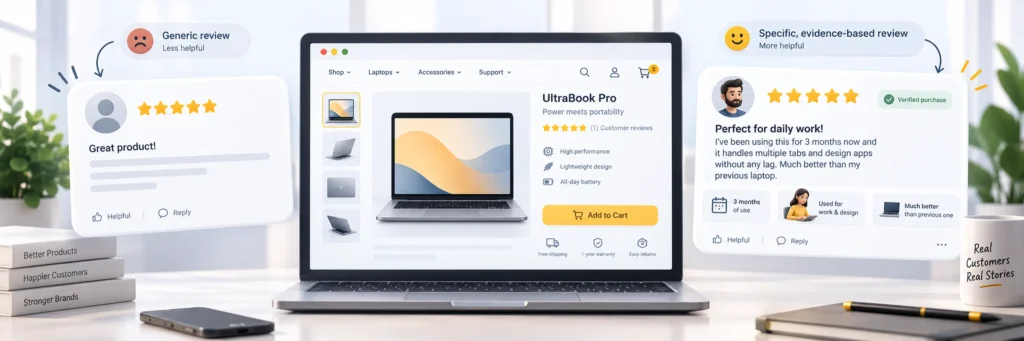
The 20 examples below all succeed for a version of the same reason. Each example provides concrete details. These include a timeframe, a direct comparison, a tangible outcome, or an honest critique. That’s the opposite of a generic stamp of approval that could apply to any product on the internet.
1. The Specific-Use-Case Review
“I bought this for my home office setup and it’s been perfect for video calls. The angle adjusts easily and it doesn’t slip on my desk like my old one did.”
Why it works: This review names a specific use case: video calls in a home office. It avoids describing the product in abstract terms. It also draws a direct comparison to an older item. This gives shoppers a tangible reason to trust the product.
Best suited for: Desk accessories, tech gadgets, and products where daily practical usage is the main customer question.
2. The Honest, Slightly Mixed Review
“The fabric is softer than I expected and the color is exactly like the photos. Sizing runs a little small though, so I’d recommend going up one size from what you’d normally wear.”
Why it works: A review with constructive criticism alongside praise feels much more trustworthy. The tip about sizing running small makes the compliments believable. Furthermore, it is the most useful piece of advice for prospective buyers.
Best suited for: Apparel, footwear, and products with sizing variables where practical guidance prevents returns.
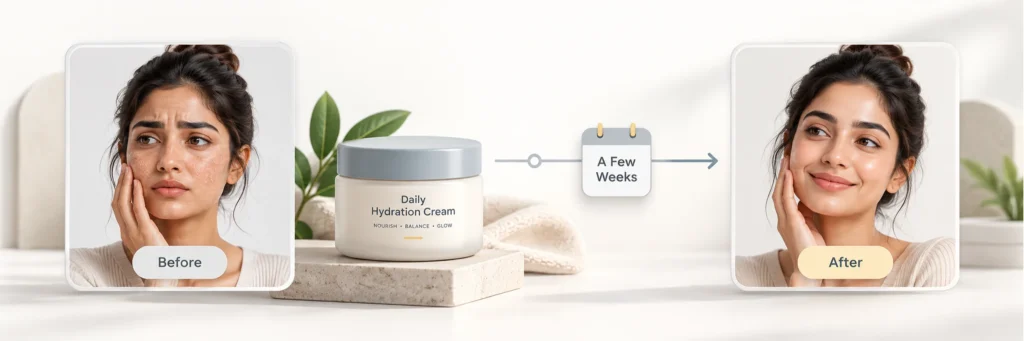
3. The Before-and-After Review
“I’ve struggled with dry skin for years and tried a lot of products that didn’t do much. After three weeks of using this every night, my skin actually feels different, less tight, less flaky. Wish I’d found this sooner.”
Why it works: This review follows a proven three-part formula: problem, timeframe, and result. That structure makes reviews extremely convincing. It works especially well for products with gradual, cumulative benefits rather than instant results.
Best suited for: Skincare, supplements, fitness items, and products where results accumulate over several weeks.
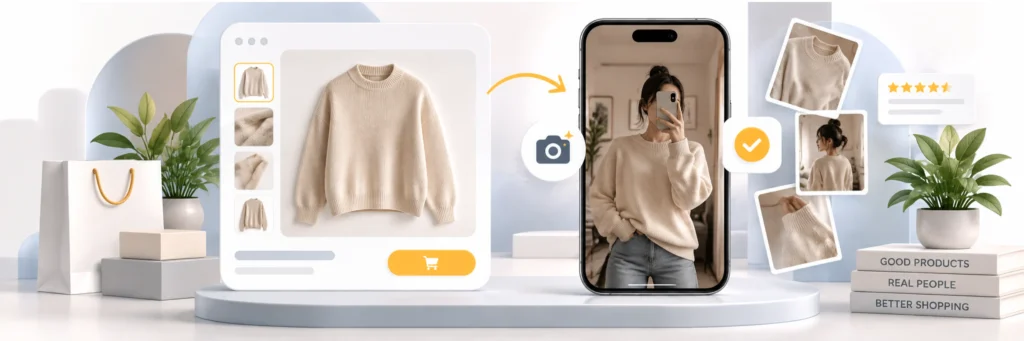
4. The Photo-First Review
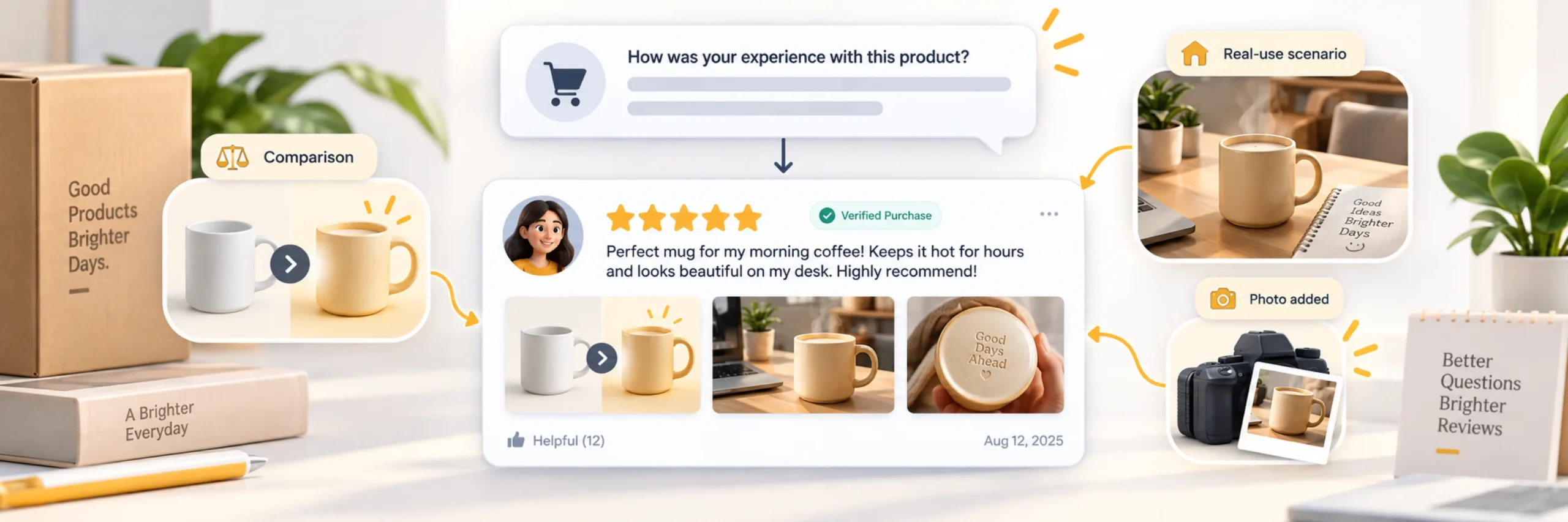
“Here’s what it actually looks like on, not the store photos. [Photo attached] True to color, fits like the model shows, and the material doesn’t feel cheap at all.”
Why it works: This review tackles a common shopper fear: misleading marketing photos. Here, the photo does the heavy lifting. The caption confirms color accuracy and fabric feel. A staged studio photo could never convey that authentic reassurance.
Best suited for: Fashion, home decor, and beauty where appearance in person is the primary shopper concern.
5. The Delivery-and-Packaging Review
“Ordered on a Tuesday, arrived Thursday, and it was packaged really carefully, no dents on the box despite it being glass. Customer service also sent a quick note checking that everything arrived okay.”
Why it works: Persuasive reviews do not always focus purely on product features. Fast shipping, careful packaging, and proactive support resolve delivery anxiety. They eliminate the fear of transit damage or unhelpful support teams.
Best suited for: Fragile items, gifts, and stores where shipping safety and speed are top concerns for first-time shoppers.
6. The Comparison-to-Competitor Review
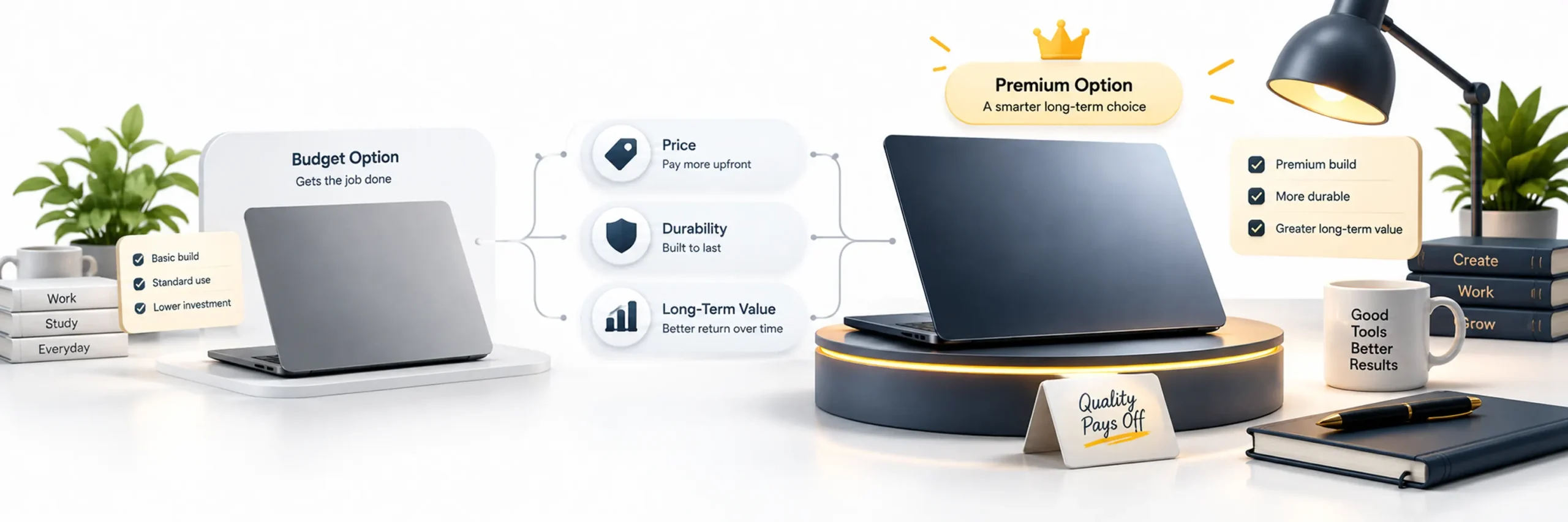
“I’ve tried two other brands before this one and they both broke within a few months. This one has held up for almost a year now with daily use, so I’m finally convinced it was worth paying a bit more.”
Why it works: Comparing an item to competitors provides readers with a clear benchmark. It avoids evaluating the product in a vacuum. Naming specific usage durations (“almost a year,” “daily use”) turns vague claims into concrete proof.
Best suited for: Premium products where customer reviews must justify higher price tags compared to competitors.
7. The Unexpected-Use Review
“I bought this as a phone stand but honestly it works even better propping up my tablet while I cook. Didn’t expect that, but it’s become the thing I use it for most.”
Why it works: Reviews revealing unadvertised uses feel spontaneous and genuine. Shoppers rarely invent quirky, practical details just to sound convincing. Furthermore, it expands perceived product versatility for buyers with similar secondary needs.
Best suited for: Multi-purpose products where showcasing diverse use cases expands customer appeal.
8. The Gift-Purchase Review
“Bought this as a birthday gift for my sister and she messaged me the same day saying how much she loved it. Great packaging too, felt like a proper gift, not just something shipped in a plain box.”
Why it works: Gift purchases carry unique social anxiety. The buyer cannot inspect the product in person, and their reputation is on the line. This review reassures shoppers by verifying both the positive reaction and quality packaging.
Best suited for: Gift items, holiday presents, and products where presentation matters as much as the item itself.
9. The Technical-Detail Review
“As someone who cares about specs, the battery genuinely lasts the 18 hours advertised, I tested it with continuous use over a weekend trip. Charging from empty to full took about 90 minutes, which matched the listing too.”
Why it works: For electronics, independently verifying manufacturer specs carries tremendous weight. It saves skeptical shoppers from doing the fact-checking themselves. Specific numbers (18 hours, 90 minutes) prove this was a real test.
Best suited for: Electronics, tools, and technical gear where shoppers seek independent verification of published specifications.
10. The Repeat-Customer Review
“This is my third order of this exact product because my dog goes through the last one so fast. At this point I just keep a spare in the cart so I don’t run out.”
Why it works: Mentioning a third purchase is one of the strongest trust signals possible. Customers never repurchase items they dislike. This implies deep satisfaction without needing a sales pitch. As a result, it feels genuine and convincing.
Best suited for: Consumables, pet supplies, food, skincare, and products customers naturally reorder.
11. The Problem-Solved Review
“I was skeptical this would actually help with my back pain while working from home, but after using it for about two weeks, I’m noticing a real difference by the end of the day. Wish I’d bought it months ago instead of pushing through the discomfort.”
Why it works: Starting with honest skepticism makes positive results feel earned. It proves the customer was not biased upfront. In addition, the two-week timeframe transforms a vague claim into verified evidence.
Best suited for: Health, wellness, and ergonomic products where shoppers often doubt exaggerated marketing claims.
12. The Visual-Transformation Review with Video
“Watch the video, this is 30 seconds of me actually assembling it start to finish. No tools needed like the listing says, and it really did take under 10 minutes.”
Why it works: Customer videos verifying manufacturer claims are exceptionally persuasive. Video proof is virtually impossible to fake. Most importantly, it directly answers whether assembly will actually be as simple as promised.
Best suited for: Furniture, DIY kits, and assembly-required products where ease of setup is a major concern.
13. The Category-Specific Fit Review
“I’m usually between a medium and large in most brands, and a large fit me perfectly here with a little room to spare. If you’re in between sizes, I’d say size up rather than down.”
Why it works: Sizing anxiety is a primary reason shoppers abandon apparel purchases. Providing body dimensions and fit advice removes this friction. It also significantly lowers return rates when shoppers act on it.
Best suited for: Apparel, shoes, and sized products, especially from brands establishing their sizing standards.
14. The Value-for-Money Review
“Not the cheapest option out there, but after comparing the materials and build quality to a couple of similar products at lower prices, I think this one is actually the better deal long-term. Feels like it’ll last.”
Why it works: Price-conscious shoppers specifically look for value justifications. Acknowledging cost upfront makes the eventual recommendation feel objective. It confirms that the quality justifies the higher price tag.
Best suited for: Premium products competing against budget alternatives where reviews must justify pricing.
15. The Customer-Service-Recovery Review
“I had an issue with my first order arriving damaged, but their support team replaced it within two days with no hassle, no return shipping required either. Honestly, the way they handled it made me trust the brand more than if nothing had gone wrong at all.”
Why it works: Reviews detailing prompt customer support build immense trust. When buyers see that issues get resolved quickly, perceived risk disappears. This gives hesitant shoppers confidence when ordering from a new store.
Best suited for: Newer stores still building trust where stellar problem resolution matters as much as product quality.
16. The Family or Household Review
“Bought two of these for my kids and honestly ended up ordering a third for myself because I kept borrowing theirs. Holds up well even with how rough kids can be on things.”
Why it works: Household reviews demonstrate universal appeal across different family members. When multiple people use an item, durability is proven. This signals exceptional utility and build quality.
Best suited for: Family goods, kitchen appliances, and kids’ products where durability under daily use is essential.
17. The Specific-Ingredient or Material Review
“Finally a moisturizer that doesn’t list fragrance as one of the first five ingredients. My skin is sensitive and this hasn’t caused any irritation after a month of daily use, which is rare for me.”
Why it works: Detailing specific ingredients proves the reviewer understands the formulation. This builds credibility with cautious, health-conscious shoppers. It directly addresses sensitivity blockers.
Best suited for: Skincare, health supplements, and organic foods where ingredient transparency is critical.
18. The Unboxing-Experience Review
“The unboxing itself felt premium, magnetic closure box, tissue paper, a little thank you card inside. Small thing, but it made the purchase feel special rather than just transactional.”
Why it works: Packaging sets the tone for customer satisfaction. Calling out magnetic boxes and elegant thank-you cards elevates perceived value. It turns a routine purchase into an enjoyable brand experience.
Best suited for: Gift items, lifestyle accessories, and premium goods where packaging defines the brand identity.
19. The Long-Term-Use Follow-Up Review
“Updating my review after six months of regular use: still going strong, no issues at all. Wanted to leave this update since a lot of reviews are written right after purchase, before anyone really knows if something will hold up.”
Why it works: Most customer feedback is submitted within days of purchase. A six-month follow-up review is exceptionally valuable. It answers the critical unspoken question about long-term durability.
Best suited for: Furniture, electronics, and durable hardware where long-term durability is the central customer concern.
20. The Short, Specific One-Liner
“Runs slightly warm but sound quality is excellent for the price, worth it.”
Why it works: Short reviews can be just as effective as long essays. This one-liner balances a minor quirk with great sound and clear price context. It demonstrates that concise feedback can still deliver high conversion.
Best suited for: Any product category, especially as a quick template for shoppers leaving mobile feedback.
What These 20 Examples Have in Common
Several clear patterns repeat across these 20 examples. Recognizing these patterns helps you collect better feedback for your own store.
First, they mention a specific timeframe. Notice mentions of three weeks, six months, or a weekend trip. Concrete durations help readers judge claims accurately.
Second, they offer direct comparisons. Reviewers compare items against prior purchases or competitors. Evaluating products against a known reference point builds instant trust.
Third, they acknowledge minor imperfections. Comments like “runs slightly warm” or “runs small” add credibility. Flawless praise often looks suspicious to experienced shoppers.
Finally, they answer unspoken purchase questions. Shoppers want to know about durability, sizing, and customer support. Each example answers one of these doubts directly.
How to Actually Get Reviews Like These from Your Customers
Knowing what great reviews look like is only the first step. You must also encourage customers to write them. The secret is asking better questions.
A generic request like “Please leave a review” produces generic responses. In contrast, targeted questions extract rich details. Try asking specific prompts such as:
- “What’s surprised you most about this product?”
- “How does this compare to what you were using before?”
- “Show us how you’re actually using it.”
- “What would you tell a friend who was considering this?”
Each question guides shoppers toward comparison and specific details. Targeted prompts generate authentic answers. Ultimately, those specific details convince new visitors to buy.